If you live in a rural area like Visalia or manage a property in the Central Valley, you likely rely on a septic system. Unlike city sewer lines, this underground treatment plant is your personal responsibility. To avoid costly backups and ensure your property remains clean, it is vital to understand how does septic tank work.
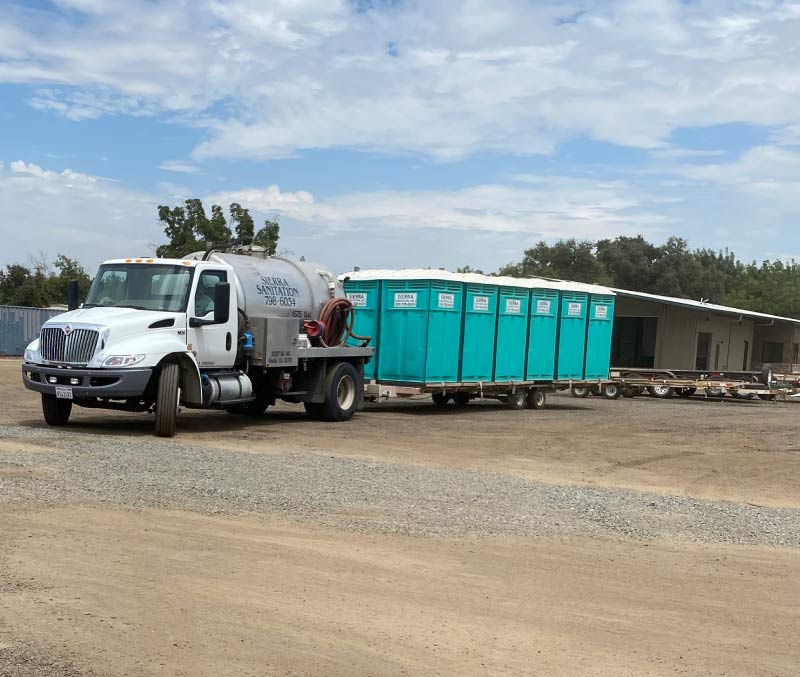
Proper knowledge prevents system failure and helps you decide when to supplement your facilities. For instance, many property owners choose
The Basic Anatomy of a Septic System
A septic system is composed of four main parts: the pipe from the home, the septic tank, the drain field, and the soil.
The tank itself is a buried, watertight container usually made of concrete, fiberglass, or polyethylene. Its primary job is to hold household waste long enough for solids and liquids to separate.
Step-by-Step: How Does Septic Tank Work?
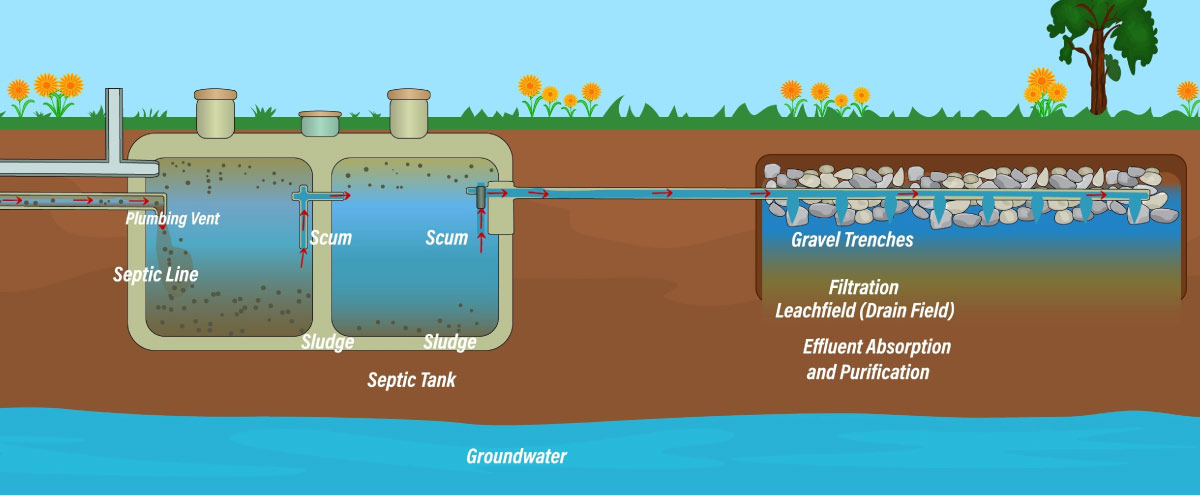
The process begins every time you flush a toilet or run a sink. All wastewater exits your home through one main pipe and enters the septic tank. Once inside, the magic of biology takes over through a natural separation process:
-
The Scum Layer: Fats, oils, and grease (FOG) float to the top.
-
The Liquid Layer (Effluent): Relatively clear water sits in the middle.
-
The Sludge Layer: Heavy solids settle at the bottom where bacteria break them down.
T-shaped outlets prevent the scum and sludge from exiting the tank. Only the liquid effluent flows out into the drain field. This is why managing your usage is key; using a
The Role of the Drain Field and Soil
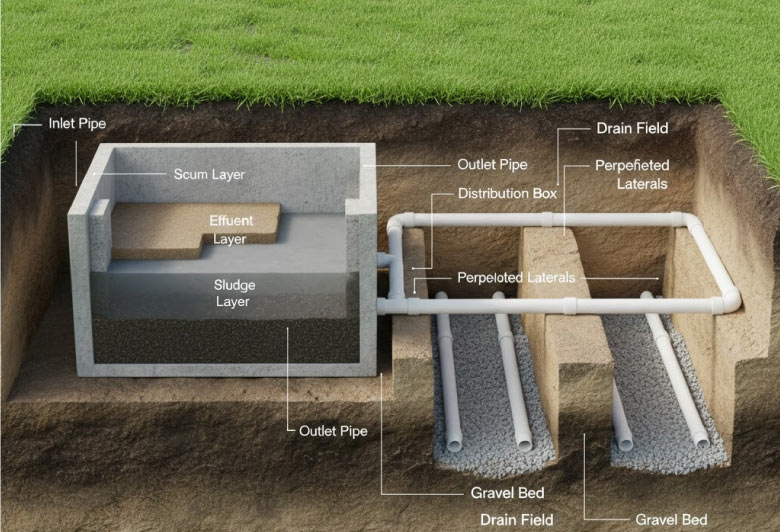
The liquid effluent travels through perforated pipes into the drain field. This area consists of shallow, gravel-filled trenches. As the water slowly seeps into the ground, the soil acts as a natural filter. It removes harmful bacteria, viruses, and nutrients before the water eventually reaches the groundwater.
Protecting Your System During Projects and Events
If you are hosting a wedding or managing a construction site, your home’s septic system isn’t designed for 50+ people. High-volume usage can push solids into the drain field, causing permanent damage. To protect your investment, we recommend renting
By diverting heavy traffic to external units, you preserve the bacterial balance inside your tank. This is especially true for
Maintenance and Costs
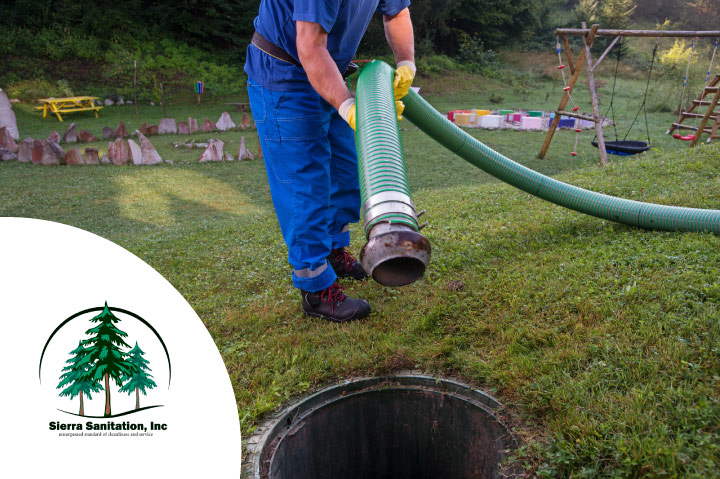
To keep your system functional, you must pump it every 3 to 5 years. A standard residential pumping service in the Central Valley typically ranges from $350 to $650. If you neglect this, a full system replacement can cost upwards of $15,000.
Consistent hand hygiene is also part of the process. Having dedicated
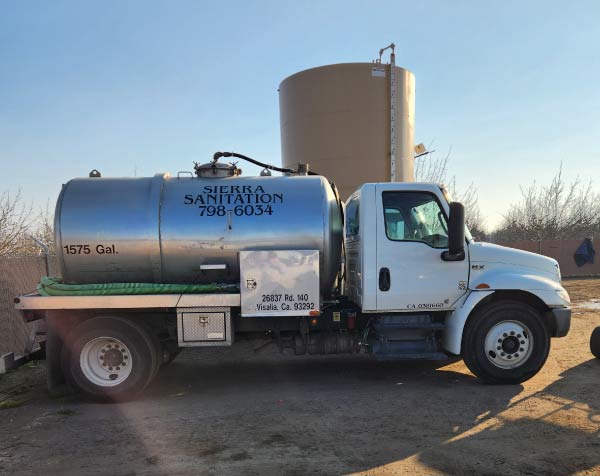
Why Choose Sierra Sanitation, Inc.?
Since 1998, Sierra Sanitation, Inc. has been a family-owned pillar of the Visalia community. Owners Justine and Brian Fisher pride themselves on “unsurpassed standards of cleanliness.”
We treat every job as if it were for our own family, ensuring you receive a personal response and expert service every time you call.
Frequently Asked Questions (FAQs)
Can I flush "flushable" wipes into my septic tank?
No. Despite the labeling, these wipes do not break down like toilet paper. they stay intact and can quickly clog your inlet pipes or fill your sludge layer prematurely, leading to a system backup.
How do I know if my septic tank is full?
Common signs include slow drains, gurgling sounds in your pipes, or patches of extra-green, lush grass over the drain field. If you smell sewage in your yard, it is an immediate sign that you need a professional inspection.
Does rain affect how my septic system works?
Yes. Heavy rainfall can saturate the drain field, making it impossible for the soil to absorb effluent. During wet seasons, it is important to minimize water usage inside the home to prevent the tank from flooding.
What should I never put down my drains?
Avoid pouring grease, chemical cleaners, paint thinners, or coffee grounds down the drain. These substances can kill the healthy bacteria needed to break down solids or clog the soil in your drain field.
How deep is a typical septic tank buried?
Most tanks are buried between 1 and 3 feet underground. Knowing the location of your tank lid is helpful for service technicians and prevents you from accidentally driving heavy machinery over it, which can crack the lid.